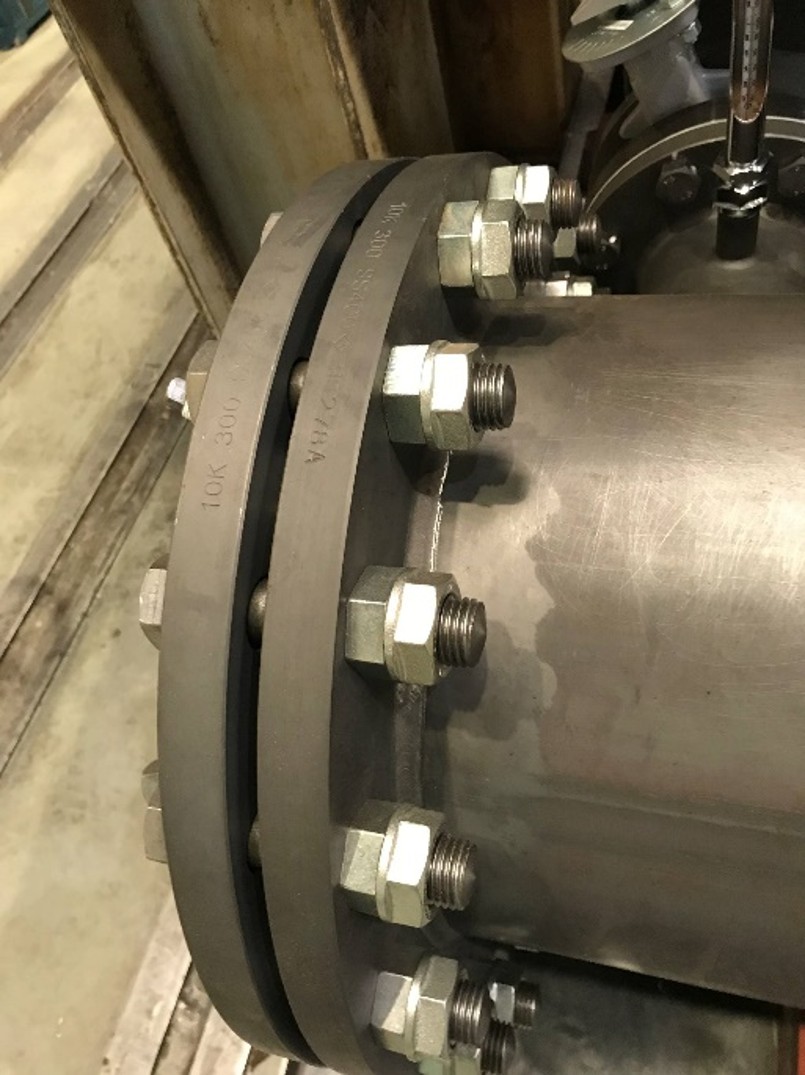
Flange connections play a critical role in oil and gas systems. They are used in pipelines, pressure vessels, and compressors. In these applications, even a small failure can cause serious problems.
However, standard hex nuts often fail to maintain preload over time. As a result, flange joints may loosen, which can lead to leaks, safety risks, and costly downtime.
Why Standard Hex Nuts Fail in Flange Joints
Oil and gas equipment operates under harsh conditions. These include vibration, pressure changes, and temperature fluctuations.
Because of these forces, bolted joints gradually lose preload. Small movements between threads increase this effect. Consequently, the connection becomes less stable over time.
In addition, compressors and flowing media generate continuous vibration. External shocks can also occur during operation. In extreme cases, shockwaves from explosions or emergency events may affect joint integrity.
Therefore, traditional solutions such as lock washers or adhesives often do not provide reliable long-term performance.
The HARDLOCK® Nut Solution
The HARDLOCK® Nut uses a different locking principle. It combines two specially designed nuts to create a wedge effect.
This design removes thread clearance and prevents loosening. As a result, the connection stays secure even under strong vibration.
You can learn more in this article:
👉 https://www.hardlock.eu/hardlock-nut-the-worlds-strongest-self-locking-nut/
In addition, the system keeps a stable clamping force under dynamic loads. Unlike adhesives, it also allows easy disassembly. Therefore, maintenance becomes faster and simpler.
Key Benefits for Oil & Gas Applications
When you replace standard hex nuts with HARDLOCK® nuts, you gain several advantages:
- Stable preload under vibration and pressure changes
- High resistance to shock and dynamic loads
- No need for regular re-tightening
- Long service life with reusable components
- Easy installation on standard bolts
Moreover, the all-metal design performs well in high temperatures. This makes it suitable for demanding industrial environments.
Performance in Extreme Conditions
Oil and gas facilities must handle critical situations. These include pressure surges and emergency shutdowns.
In rare cases, explosions or fire exposure may occur. Such events create strong shockwaves and thermal stress.
Even under these conditions, the HARDLOCK® Nut maintains its locking force. The wedge mechanism works in all directions. As a result, the joint remains secure.
You can find more details here:
👉 https://www.hardlock.eu/hardlock-nut-main-benefits/
Because the system is fully metallic, it also resists high temperatures. Therefore, it performs reliably even in fire-affected environments.
Typical Use Cases in Oil & Gas
HARDLOCK® nuts are used in many applications across the industry. For example:
- Pipeline flange connections
- Compressor and pump units
- Pressure vessel joints
- Offshore platforms
- Refineries and processing plants
You can also explore a related application here:
👉 https://www.hardlock.eu/hardlock-nut-in-power-plants/
Why Engineers Choose HARDLOCK®
Engineers need reliable fastening solutions. In oil and gas, safety and uptime are critical.
Even small loosening can lead to leaks or shutdowns. Therefore, many companies move away from standard fastening methods.
HARDLOCK® nuts offer long-term stability without frequent maintenance. They perform well in vibration-heavy environments.
Learn more about typical applications:
👉 https://www.hardlock.eu/where-is-hardlock-nut-often-used/
Conclusion
Reliable flange connections are essential in oil and gas systems. However, standard hex nuts cannot always meet these demands.
HARDLOCK® nuts provide a stronger and more stable solution. They prevent loosening and maintain preload over time.
As a result, they improve safety, reduce maintenance, and increase system reliability. For this reason, they are a smart choice for critical flange connections.