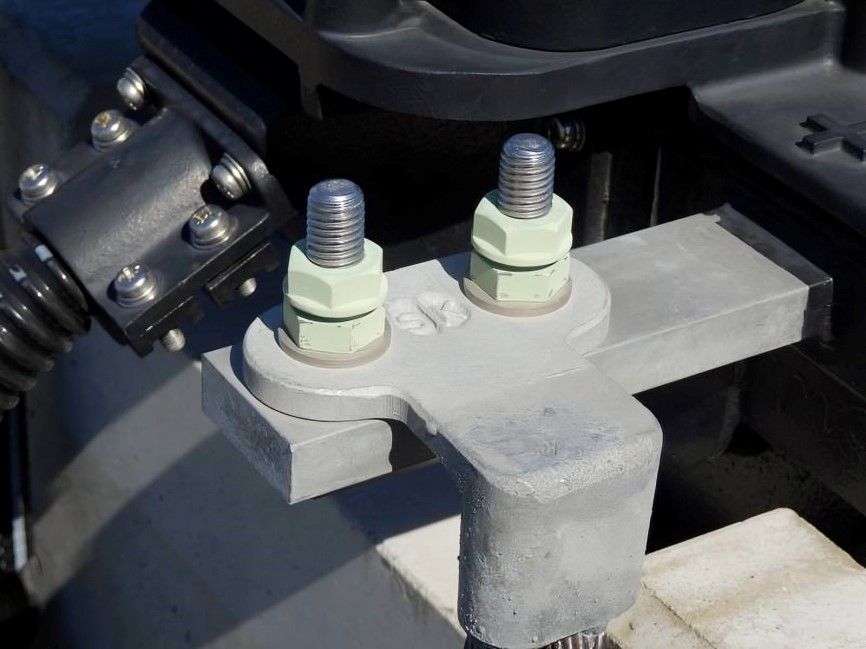
An impedance bond is critical in railway signalling because it ensures electrical isolation of track circuits from other electrical systems. This isolation allows signals to flow correctly, preventing interference or false signalling. The cable terminal securely connects cables to the impedance bond and track, establishing reliable electrical continuity.
These joints face both static loads—from the weight of thick power cables—and dynamic loads from train-induced vibrations and wind. Compounding the problem, cable terminals typically have short grip lengths (the combined thickness of clamped materials, excluding washers and nuts), making them especially prone to loosening.
If loosening occurs, the consequences can be severe:
- Increased Electrical Resistance and Overheating: Loose connections create higher resistance, generating heat that can damage insulation, degrade cables, and pose fire or short-circuit risks.
- Disruption of Track Circuit and Signal Integrity: Loss of continuity at the cable terminal can compromise the track circuit, causing intermittent or failed signals. This may trigger false train detection or missed train presence, impacting safety systems like Automatic Train Control (ATC) and Automatic Train Protection (ATP), and significantly increasing the risk of unsafe conditions.
To prevent these issues, HARDLOCK® nuts have been used since 2000 to secure impedance bond terminals across both high-speed and conventional rail networks in Japan. The solution has also been adopted in Taiwan’s high-speed rail, ensuring stable electrical continuity and reliable signal transmission.