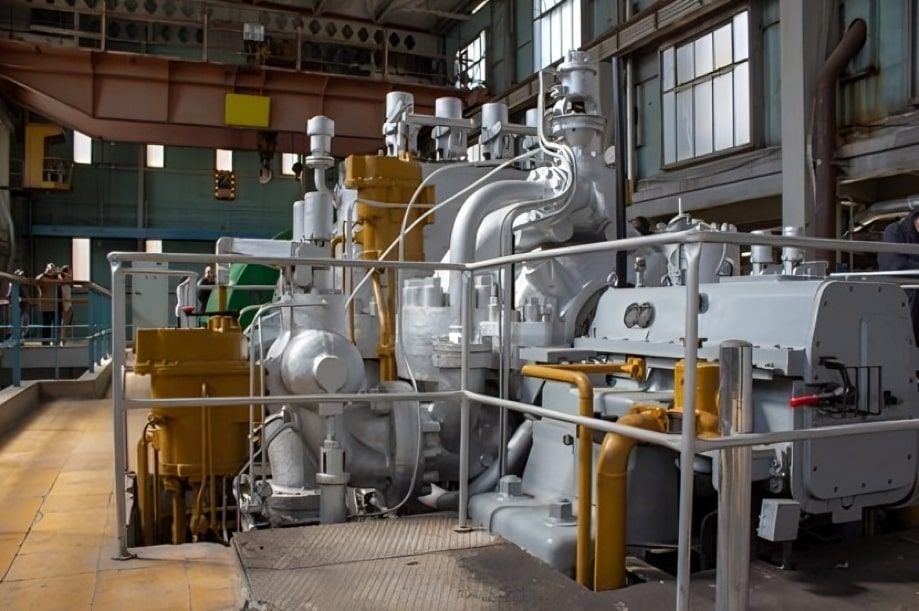
An anti loosening nut for turbines is critical for ensuring safety and reliability in high-vibration environments such as gas turbines. These specialized locking nuts prevent bolt loosening caused by extreme rotational forces, thermal expansion, and continuous vibration.
In these environments, even a small loss of preload can lead to reduced efficiency, increased wear, or critical system failure.
HARDLOCK® Nut is used in gas turbines to help maintain secure fastening and stable preload, supporting long-term operational reliability.
Why Fastening Reliability Is Critical in Gas Turbines
Gas turbines rely on precise alignment and stable mechanical connections.
Bolted joints are used in:
- Structural assemblies
- Rotating components
- Auxiliary systems
If preload is lost:
- Components may shift
- Vibrations can increase
- Efficiency may decrease
- Risk of failure rises
👉 Learn more about preload loss:
https://www.hardlock.eu/why-do-bolts-nuts-come-loose-factors-influencing-bolt-preload-loss/
The Challenge: Extreme Operating Conditions
Gas turbines expose fasteners to a combination of demanding factors.
High Temperatures
Thermal expansion and contraction can:
- Change bolt length
- Reduce clamping force
- Lead to preload loss
Continuous Vibration
Rotating machinery generates constant vibration, which can:
- Reduce friction in threads
- Cause gradual loosening
Dynamic Loads
Operational cycles and load variations create additional stress on bolted joints.
Limited Maintenance Access
Many turbine components are difficult to access, making reliability essential.
👉 See how loosening occurs:
https://www.hardlock.eu/why-the-hardlock-nut-does-not-loosen/
Where HARDLOCK® Nut Is Used in Gas Turbines
HARDLOCK® Nut is applied in areas where maintaining preload is critical:
- Structural fastening points
- Auxiliary system connections
- Components exposed to vibration and heat
In these locations, stable fastening directly impacts system performance.
HARDLOCK® Nut: Mechanical Locking for Demanding Conditions
HARDLOCK® Nut uses a mechanical wedge-locking principle designed to maintain preload under challenging conditions.
How it works:
- Two nuts function as a single locking system
- The top nut has an eccentric (off-center) thread
- Tightening creates a radial locking force
- This force helps prevent rotation
👉 Full explanation:
https://www.hardlock.eu/why-the-hardlock-nut-does-not-loosen/
Key Benefits in Gas Turbine Applications
✔ Maintains Preload Under Thermal Cycling
The mechanical locking principle supports stability even when temperature changes affect the joint.
✔ Resists Loosening Under Vibration
Continuous vibration in turbine systems can lead to loosening in conventional fasteners.
HARDLOCK® Nut helps maintain joint integrity over time.
✔ Reduces Maintenance and Downtime
Unplanned maintenance in gas turbines can be costly.
By maintaining stable fastening, HARDLOCK® Nut can help:
- Reduce inspection frequency
- Minimize downtime
- Improve operational efficiency
✔ Supports Long-Term Reliability
Stable fastening contributes to:
- Consistent performance
- Reduced wear
- Extended component lifetime
Comparison with Conventional Fastening Methods
Traditional solutions often rely on friction or additional locking elements.
Limitations:
- Reduced effectiveness under high temperature
- Loosening under vibration
- Increased maintenance requirements
👉 Compare fastening technologies:
https://www.hardlock.eu/hardlock-nut-vs-prevailing-torque-type-nut/
Engineering Perspective: Cost of Failure in Gas Turbines
In gas turbine applications, the cost of fastening failure can be significant:
- Equipment damage
- Production losses
- Safety risks
The cost of a reliable fastening solution is small compared to the cost of failure.
👉 Learn more about overall benefits:
https://www.hardlock.eu/hardlock-nut-main-benefits/
Related Applications in Energy Systems
Similar challenges exist in other high-demand environments:
- High Temperature Applications: Proven Performance up to 800°C in Critical Industries → https://www.hardlock.eu/hardlock-nuts-in-high-temperature-applications-proven-performance-up-to-800-c-in-critical-industries/
- Oil & Gas Flange Connections → https://www.hardlock.eu/hardlock-nut-in-oil-gas-flange-connections/
- Nuclear Power Plants → https://www.hardlock.eu/hardlock-nut-in-nuclear-power-plants/
- Power Plants → https://www.hardlock.eu/hardlock-nut-in-power-plants/
- Testing for Fussion Reactor → https://www.hardlock.eu/hardlock-nut-testing-for-fussion-reactor/
- Electrical Applications → https://www.hardlock.eu/hardlock-nut-in-electrical-applications/
- Pumps → https://www.hardlock.eu/hardlock-bearing-nut-in-pumps/
- Ventilation Fans → https://www.hardlock.eu/hardlock-nut-on-ventilation-fans/
- Wind Power Turbines → https://www.hardlock.eu/hardlock-nuts-in-wind-power-turbines/
👉 Explore full application range:
https://www.hardlock.eu/where-is-hardlock-nut-often-used/
When to Use HARDLOCK® Nut in Gas Turbines
Consider this solution if your application involves:
- High temperatures
- Continuous vibration
- Critical mechanical connections
- High cost of downtime
Conclusion
Gas turbines require fastening solutions that perform reliably under extreme conditions.
By maintaining preload and resisting loosening, HARDLOCK® Nut provides a mechanical solution for stable and secure connections in demanding turbine environments.
Looking to Improve Turbine Reliability?
Choosing the right fastening system can reduce maintenance, improve efficiency, and enhance operational safety.
👉 Start with the fundamentals:
https://www.hardlock.eu/why-do-bolts-nuts-come-loose-factors-influencing-bolt-preload-loss/