Introduction
Wind power turbines operate under extreme and continuously changing loads, making fastening reliability a critical factor in their long-term performance. From tower structures to nacelles and rotor assemblies, bolted joints must withstand constant vibration, cyclic stress, and environmental exposure.
Failure of these connections can result in:
- costly maintenance and downtime
- reduced energy efficiency
- serious safety risks
To ensure reliability, engineers increasingly adopt advanced anti-loosening solutions such as HARDLOCK® nuts.
👉 Learn how HARDLOCK® technology works:
https://www.hardlock.eu/hardlock-nut-the-worlds-strongest-self-locking-nut/
The Challenge: Vibration and Dynamic Loads in Wind Turbines
Wind turbines are subject to complex mechanical forces:
- continuous rotational movement of blades
- fluctuating wind loads (gusts, turbulence)
- cyclic stress on tower and nacelle
- start-stop operational cycles
- temperature variations and environmental exposure
These factors lead to micro-movements in bolted joints, causing gradual loss of preload and eventual loosening.
This issue is explained in detail here:
👉 https://www.hardlock.eu/hardlock-nut-the-worlds-strongest-self-locking-nut/
Without effective locking:
- bolts loosen over time
- maintenance frequency increases
- operational reliability decreases
Real-World Applications of HARDLOCK® Nuts in Wind Power Turbines
1. Tower Flange Connections
Wind turbine towers are assembled using large flange connections that must withstand:
- continuous dynamic loading
- wind-induced oscillation
- long-term fatigue stress
HARDLOCK® nuts ensure stable preload and prevent loosening, even under constant vibration.
A comparable application in flange systems can be seen here:
👉 https://www.hardlock.eu/hardlock-nut-in-oil-gas-flange-connections/
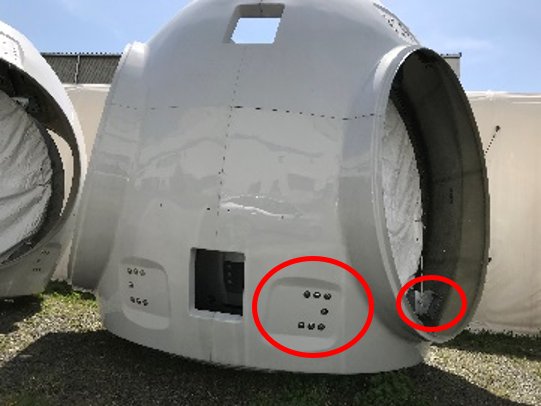
2. Nacelle and Gearbox Mounting
The nacelle contains critical components such as:
- gearbox
- generator
- braking systems
These components generate:
- high-frequency vibration
- rotational forces
- mechanical stress
HARDLOCK® nuts provide reliable fastening without the need for frequent maintenance.
3. Blade and Hub Connections
Blade connections are among the most critical fastening points:
- exposed to cyclic aerodynamic loads
- subject to fatigue and stress concentration
- require consistent clamping force
Failure in these joints can lead to catastrophic consequences.
HARDLOCK® nuts maintain preload even under extreme cyclic loading conditions.
4. Auxiliary Systems and Electrical Components
Wind turbines include multiple auxiliary systems:
- control units
- cable management systems
- monitoring equipment
Loose fasteners in these systems can cause:
- system instability
- overheating
- operational failure
Similar risks are discussed here:
👉 https://www.hardlock.eu/hardlock-nut-in-electrical-applications/
Why HARDLOCK® Nuts Are Ideal for Wind Energy Applications
1. Superior Anti-Loosening Performance
HARDLOCK® nuts use a convex–concave wedge locking mechanism that eliminates thread clearance and prevents rotational loosening.
👉 Technical explanation:
https://www.hardlock.eu/hardlock-nut-the-worlds-strongest-self-locking-nut/
2. Long-Term Reliability in Remote Locations
Wind turbines are often installed in:
- offshore environments
- remote onshore locations
- hard-to-access terrain
HARDLOCK® nuts:
- maintain performance over long periods
- reduce need for inspection and servicing
- improve overall system reliability
3. Reduced Maintenance and Operational Costs
Maintenance of wind turbines is expensive and complex.
Using HARDLOCK® nuts results in:
- fewer service interventions
- reduced downtime
- lower lifecycle costs
👉 Learn more about benefits:
https://www.hardlock.eu/hardlock-nut-main-benefits/
4. Resistance to Harsh Environmental Conditions
Wind turbines operate in:
- moisture and salt (offshore)
- temperature extremes
- constant exposure to weather
HARDLOCK® nuts:
- maintain performance in harsh environments
- provide consistent locking over time
5. Reusability and Sustainability
HARDLOCK® nuts are:
- reusable without loss of performance
- fully metallic and durable
This supports:
- sustainable engineering
- reduced material waste
- long-term cost efficiency
Comparison: HARDLOCK® vs Conventional Fastening Methods
| Feature | Standard Nut | Nylon Lock Nut | Adhesive | HARDLOCK® Nut |
|---|---|---|---|---|
| Vibration resistance | Low | Medium | Medium | Extreme |
| Maintenance required | High | Medium | High | Minimal |
| Lifespan | Medium | Low | Low | Very Long |
| Reusability | High | Low | None | High |
| Suitability for wind turbines | Low | Medium | Medium | Excellent |
Related Articles
Explore more HARDLOCK® applications:
- 🔗 https://www.hardlock.eu/hardlock-nut-in-oil-gas-flange-connections/
- 🔗 https://www.hardlock.eu/hardlock-nut-on-vibration-screens/
- 🔗 https://www.hardlock.eu/hardlock-nut-in-electrical-applications/
- 🔗 https://www.hardlock.eu/hardlock-nut-main-benefits/
- 🔗 https://www.hardlock.eu/hardlock-nut-the-worlds-strongest-self-locking-nut/
Conclusion: Reliable Fastening for Renewable Energy Infrastructure
Wind turbines require fastening solutions that deliver:
- zero loosening under vibration
- long-term durability
- minimal maintenance
HARDLOCK® nuts provide a proven engineering solution that enhances the reliability and efficiency of wind energy systems.
📩 Working in wind energy or turbine manufacturing?
👉 Contact HARDLOCK® specialists for:
- engineering consultation
- application-specific recommendations
- testing data and certifications
HARDLOCK® – The safest choice for critical bolted joints in renewable energy.