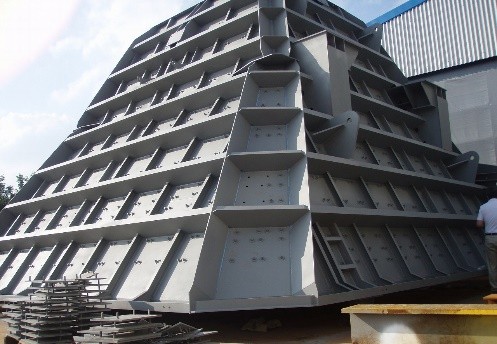
Conveyor & Hopper Failures in Steel Mills: Why Vibration Resistant Nuts Steel Plant Solutions Are Critical
In steel mills, vibration resistant nuts steel plant applications are essential for solving one of the most persistent problems in material handling systems: bolt loosening in conveyors and hoppers.
Despite correct installation and torque, bolts in:
- Conveyor skirts
- Hopper liners
- Chain conveyors
continue to loosen under real operating conditions. This is not a maintenance issue—it is a fundamental limitation of conventional fastening systems.
At Hardlock Industry Co., Ltd., field data consistently shows that only mechanical locking solutions designed for vibration environments can prevent recurrence.
Root Causes of Conveyor and Hopper Bolt Loosening
Vibration and Impact in Steel Plant Environments
Steel plants process:
- Iron ore
- Coal
- Limestone
These materials create:
- Continuous vibration
- Repetitive impact
- Irregular dynamic loads
➡️ This leads to rotational self-loosening, even when torque is correctly applied.
Low Preload Conditions Require Vibration Resistant Nuts Steel Plant Solutions
In many applications such as:
- Hopper liners
- Conveyor skirts
the joint design results in:
- Thin clamping surfaces
- Deformation over time
- Low preload conditions
➡️ Conventional nuts fail because they depend on friction and preload stability
Limited Maintenance Access
Typical installation locations include:
- Inside chutes
- Beneath conveyors
- High-temperature zones
This makes:
- Inspection difficult
- Re-tightening impractical
➡️ Many joints are never re-tightened after installation
Wear and Gap Formation
Over time:
- Liners wear
- Surfaces deform
- Gaps increase
This results in:
- Loss of preload
- Increased vibration
- Accelerated loosening
Welding Is Not a Long-Term Solution
To prevent loosening, operators often use:
- Tack welding
However, this creates:
- Difficult maintenance
- Increased downtime
- Risk of structural damage
➡️ Steel mills are shifting toward vibration resistant nuts steel plant solutions instead of welding
Steel Plant Use Cases for Vibration Resistant Nuts
Field-proven applications include:
- Hopper liner fastening
- Conveyor skirt systems
- Chain conveyors
- Bucket handling systems
These are critical zones where:
- Vibration is constant
- Safety is essential
- Maintenance access is limited
Why Standard Fasteners Fail in Steel Plant Conveyor Systems
Spring Washers
- Ineffective under vibration
- Do not prevent loosening
Nylon Insert Nuts
- Fail under high temperatures
- Not suitable for steel plant environments
Double Nut Systems
- Require precise installation
- Lose effectiveness when preload drops
Adhesives
- Sensitive to contamination
- Difficult to apply in dusty conditions
➡️ These solutions fail because they rely on friction—not true locking.
How Vibration Resistant Nuts Steel Plant Technology Solves the Problem
HARDLOCK® Nuts use a mechanical wedge-locking principle, not friction.
This ensures:
- No rotation under vibration
- Reliable locking even with low preload
- Independence from surface condition
This makes them ideal for:
- Conveyor systems
- Hopper liners
- High-impact material transfer zones
👉 For a deeper understanding of why loosening occurs in vibration environments, see:
https://www.hardlock.eu/why-the-hardlock-nut-does-not-loosen/
Operational Benefits in Steel Plants
Reduced Maintenance
- No repeated tightening
- Fewer shutdowns
Increased Safety
- Eliminates loose fasteners
- Reduces failure risk in critical zones
Faster Maintenance Work
- No welding required
- Easy disassembly and reinstallation
Application Focus: Conveyor Skirts
Conveyor skirts require:
- Precise alignment
- Continuous sealing
Common issues:
- Bolt loosening
- Misalignment
- Dust leakage
With vibration resistant nuts steel plant solutions:
- Fastening remains secure
- Alignment is maintained
- Maintenance intervals are extended
👉 Learn how the mechanism works:
- https://www.hardlock.eu/hardlock-nut-the-worlds-strongest-self-locking-nut/
- https://www.hardlock.eu/why-the-hardlock-nut-does-not-loosen/
Application Focus: Hopper Liners
Hopper liners face:
- Heavy impact loads
- Continuous wear
Common failures:
- Bolt loosening
- Difficult replacement
- Safety risks
Using HARDLOCK® Nuts:
- Prevents loosening under shock loads
- Simplifies liner replacement
- Eliminates need for welding
When to Implement Vibration Resistant Nuts in Steel Plants
Consider retrofit if you experience:
- Frequent bolt loosening
- High maintenance workload
- Safety concerns in conveyors or hoppers
➡️ HARDLOCK® Nuts can be installed on existing bolts without redesign
Similar challenges exist in:
- Steel Industry → https://www.hardlock.eu/blog-anti-loosening-nut-steel-industry/
- Ball and rod mills → https://www.hardlock.eu/hardlock-nut-in-ball-and-rod-mills/
- Offshore & Onshore Applications of HARDLOCK Nuts: Engineering Reliability in Extreme Environments → https://www.hardlock.eu/offshore-onshore-applications-of-hardlock-nuts-engineering-reliability-in-extreme-environments/
- Sintering Plants → https://www.hardlock.eu/hardlock-nut-in-sintering-plants/
- Ball and Rod Mills → https://www.hardlock.eu/hardlock-nut-in-ball-and-rod-mills/
- Vibration Screens → https://www.hardlock.eu/hardlock-nut-on-vibration-screens/?preview_id=5113&preview_nonce=50bbb8fe5c&preview=true&_thumbnail_id=5114
- Steel Making Lines → https://www.hardlock.eu/hardlock-bearing-nut-in-steel-making-lines/
- Cone Crushers → https://www.hardlock.eu/hardlock-nut-on-cone-crushers/
Conclusion: Eliminate Loosening at the Source
Conveyor and hopper failures are not random—they are predictable results of unsuitable fastening systems.
By implementing vibration resistant nuts steel plant solutions, operators can:
- Eliminate loosening
- Reduce downtime
- Improve safety
Need a proven solution for conveyor or hopper bolt loosening?
Need a proven solution for conveyor or hopper bolt loosening?
Contact HARDLOCK® engineers for a steel plant application assessment.