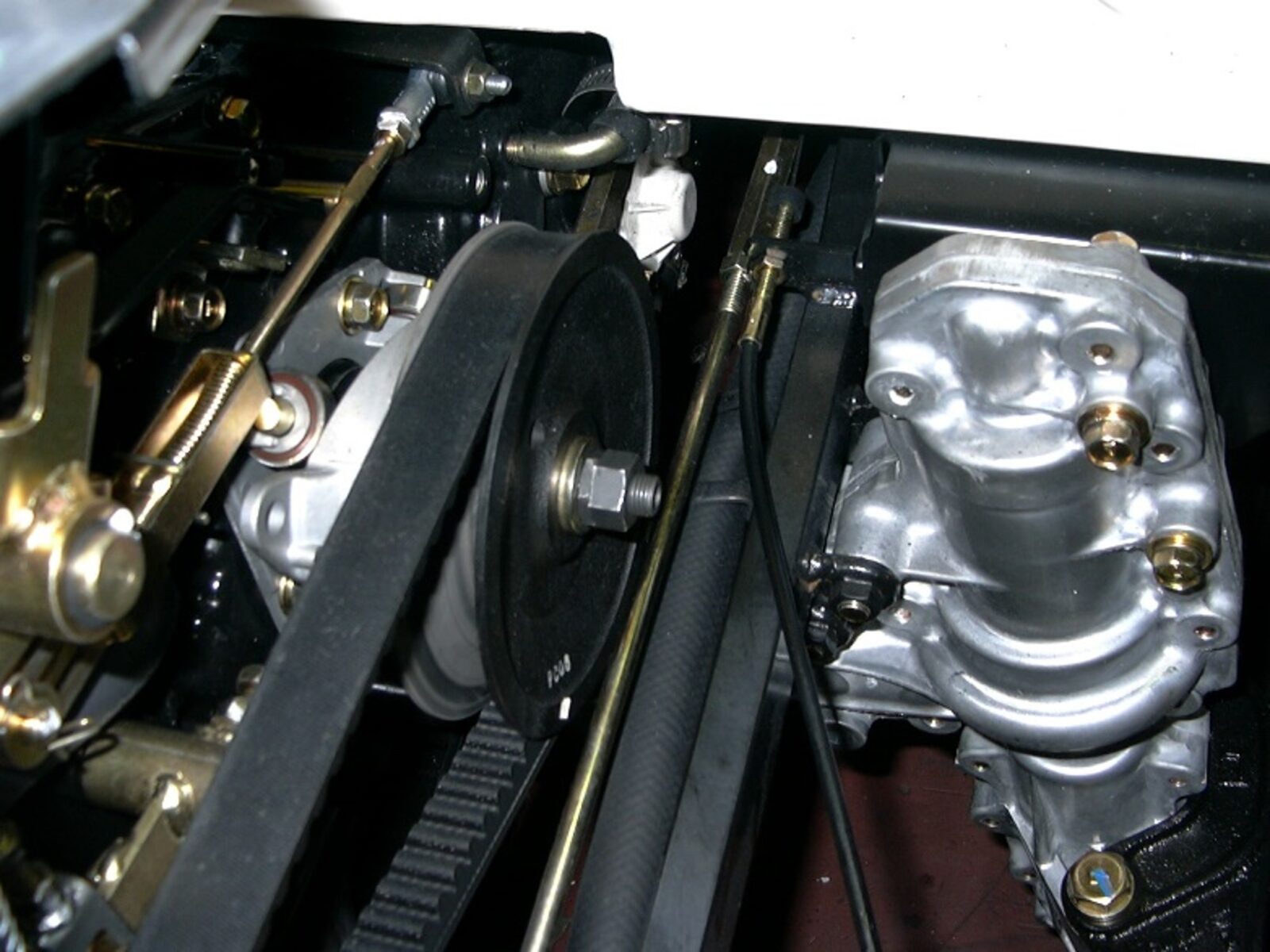
The automotive industry demands high-performance fastening solutions that ensure safety, durability, and long-term reliability.
Modern vehicles operate under constant vibration, dynamic loads, and changing environmental conditions. In such environments, bolted joints must maintain stable preload and resistance to loosening throughout the vehicle’s lifecycle.
HARDLOCK® Nut is used in automotive applications to help maintain secure fastening in safety-critical components, supporting consistent performance and reducing the risk of failure.
Why Fastening Matters in Automotive Applications
Vehicles rely on thousands of bolted joints across multiple systems.
Critical applications include:
- Suspension and chassis components
- Engine and powertrain assemblies
- Exhaust systems
- Electric vehicle (EV) battery and structural components
These connections must ensure:
- Structural integrity
- Vibration resistance
- Long-term durability
The Challenge: Dynamic Conditions in Vehicles
Automotive environments expose fasteners to a combination of mechanical and thermal stresses.
Continuous Vibration and Road-Induced Loads
Vehicles experience:
- Constant vibration from engine and road conditions
- Shock loads from uneven surfaces
- Cyclic stress during acceleration and braking
These forces can gradually loosen conventional nuts.
Fatigue and Repeated Load Cycles
Automotive components undergo:
- Millions of load cycles over their lifetime
- Repeated stress reversals
- Progressive material fatigue
This can reduce clamping force in standard fastening systems.
Thermal Cycling
Vehicles operate across a wide temperature range:
- Engine heat during operation
- Cooling cycles when stationary
- Extreme environmental conditions
Thermal expansion and contraction can lead to preload loss.
Noise, Vibration, and Harshness (NVH)
Loose fasteners can contribute to:
- Increased vibration
- Noise generation
- Reduced ride quality
👉 Learn more about preload loss:
https://www.hardlock.eu/why-do-bolts-nuts-come-loose-factors-influencing-bolt-preload-loss/
Real-World Use Cases in the Automotive Industry
HARDLOCK® Nut is used in various automotive applications where loosening is not acceptable:
- Suspension systems exposed to continuous vibration
- Engine components subject to thermal and dynamic loads
- Drivetrain assemblies requiring stable preload
- EV structures and battery systems where safety is critical
In these use cases, maintaining clamping force is essential for safety and performance.
HARDLOCK® Nut: Mechanical Locking for Automotive Reliability
HARDLOCK® Nut uses a mechanical wedge-locking principle that maintains preload without relying solely on friction.
How it works:
- Two nuts (convex + concave) form a single locking system
- An eccentric thread creates radial locking force
- This force prevents rotational loosening
This design ensures reliable fastening even under:
- Continuous vibration
- Dynamic loads
- Thermal cycling
👉 Full technical explanation:
https://www.hardlock.eu/why-the-hardlock-nut-does-not-loosen/
Where HARDLOCK® Nut Is Used in Vehicles
Typical applications include:
- Chassis and suspension connections
- Engine and transmission components
- Structural joints in EV platforms
- High-load and safety-critical fastenings
These locations require long-term stability and resistance to loosening.
Key Benefits for Automotive Applications
✔ Prevents Loosening Under Vibration
Maintains clamping force even under continuous road-induced vibration.
✔ Supports Long-Term Durability
Reliable fastening helps withstand millions of load cycles.
✔ Improves Vehicle Safety
Stable connections reduce the risk of:
- Component failure
- Structural instability
- Safety-critical malfunctions
✔ Reduces Warranty and Maintenance Costs
Reliable fastening can help:
- Minimize service interventions
- Reduce warranty claims
- Lower total cost of ownership
✔ Suitable for EV and Modern Vehicle Platforms
Designed for:
- Electric vehicles (EVs)
- Lightweight structures
- High-performance applications
Comparison with Conventional Fastening Methods
Traditional solutions (nylon nuts, spring washers, adhesives) rely on friction or deformation.
Limitations:
- Loss of locking performance over time
- Sensitivity to temperature
- Reduced effectiveness under vibration
HARDLOCK® Nut provides a mechanical anti-loosening solution independent of friction, making it suitable for demanding automotive environments.
👉 Compare fastening technologies:
https://www.hardlock.eu/hardlock-nut-vs-prevailing-torque-type-nut/
Engineering Perspective: Cost of Failure in Automotive Systems
In the automotive industry, fastening reliability directly impacts:
- Vehicle safety
- Brand reputation
- Lifecycle costs
Loose fasteners can lead to:
- Recalls
- Increased warranty costs
- Safety risks
Reliable fastening solutions help mitigate these issues.
👉 Learn more about benefits:
https://www.hardlock.eu/hardlock-nut-main-benefits/
Related Applications in Mobility and Transport
Similar challenges exist in:
- HARDLOCK® Set Screw on TESLA Die Castings → https://www.hardlock.eu/hardlock-set-screw-on-tesla-die-castings/
- Military Vehicles → https://www.hardlock.eu/hardlock-nuts-in-military-vehicles/
- Vehicles → https://www.hardlock.eu/applications/vehicles/
- Rolling Stock → https://www.hardlock.eu/hardlock-nuts-in-rolling-stock/
👉 Explore full application range:
https://www.hardlock.eu/where-is-hardlock-nut-often-used/
When to Use HARDLOCK® Nut in Automotive Applications
Consider this solution if your application involves:
- Continuous vibration and dynamic loads
- Safety-critical components
- High lifecycle durability requirements
- EV or advanced vehicle platforms
Conclusion
Automotive applications require fastening solutions that can withstand vibration, fatigue, and thermal stress over long service periods.
By maintaining preload and preventing loosening, HARDLOCK® Nut provides a mechanical solution for secure and reliable fastening in modern vehicles.
Looking to Improve Automotive Reliability?
Choosing the right fastening system can enhance safety, reduce costs, and support long-term vehicle performance.
👉 Start with the fundamentals:
https://www.hardlock.eu/why-do-bolts-nuts-come-loose-factors-influencing-bolt-preload-loss/