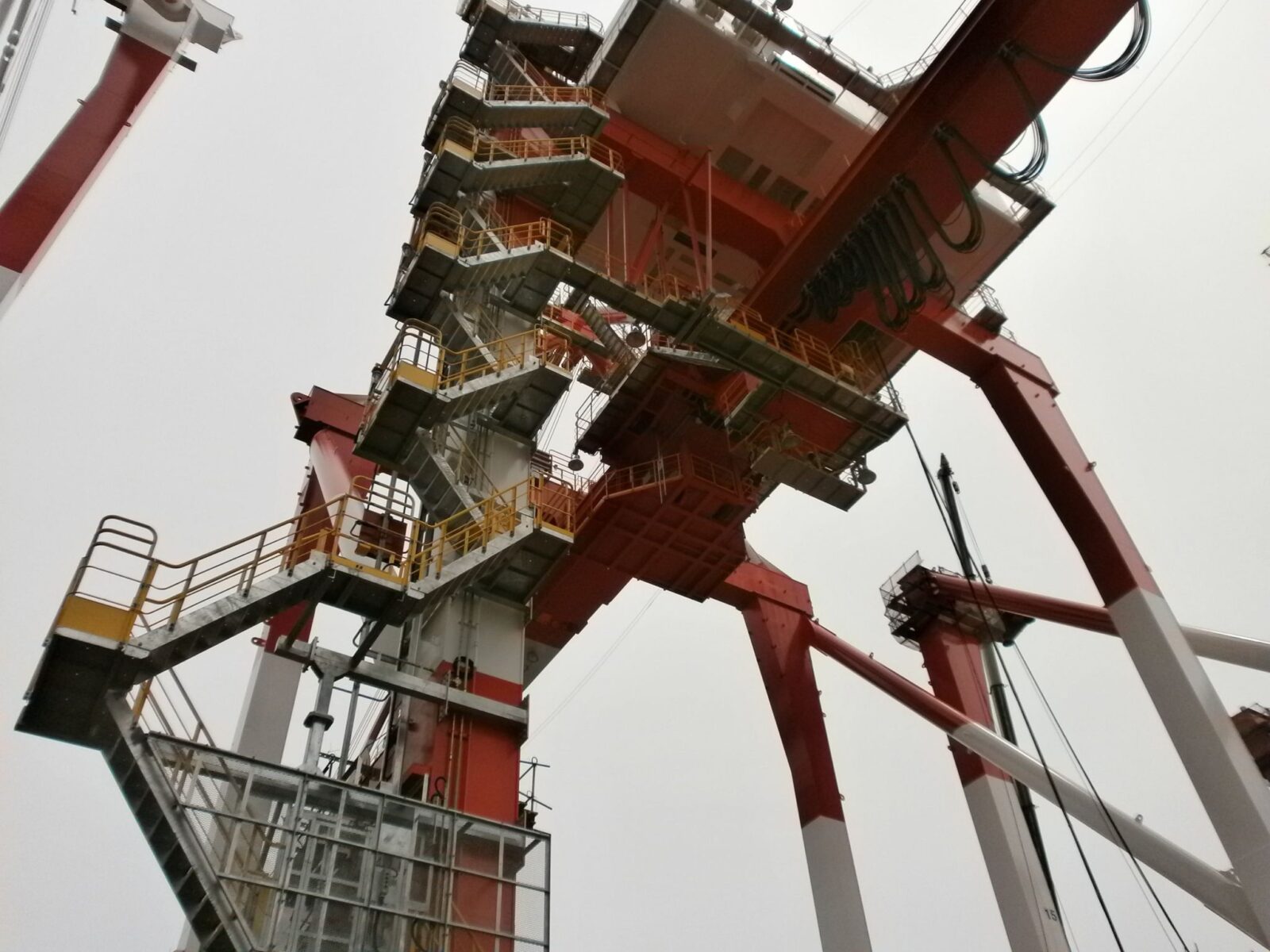
Cranes are essential in construction, logistics, ports, and industrial operations, where they handle heavy loads under dynamic conditions.
These systems operate under constant movement, varying loads, and strict safety requirements, making fastening reliability critical.
Even a small loss of preload in a bolted joint can lead to reduced stability, increased wear, or safety risks.
HARDLOCK® Nut is used on cranes to help maintain secure fastening and stable preload, supporting safe and efficient lifting operations.
Why Fastening Matters in Crane Applications
Cranes rely on bolted joints in key structural and mechanical components, including:
- Boom and jib connections
- Slewing mechanisms
- Structural frames
- Load-bearing assemblies
These joints must maintain:
- Structural integrity
- Precise load transfer
- Operational safety
The Challenge: Dynamic Loads and Continuous Operation
Crane systems are exposed to demanding conditions that can lead to loosening.
Dynamic and Variable Loads
Lifting operations create:
- Changing load forces
- Sudden load shifts
- High mechanical stress
These forces can affect bolt preload over time.
Continuous Movement and Vibration
Cranes operate with:
- Rotational movement
- Repetitive lifting cycles
- Mechanical vibration
These factors reduce friction in conventional fasteners.
Fatigue and Cyclic Stress
Repeated loading and unloading cycles can:
- Cause micro-movements
- Lead to gradual loosening
- Increase the risk of failure
Outdoor and Harsh Environments
Many cranes operate in:
- Construction sites
- Ports and offshore environments
- Industrial facilities
Exposure to weather and environmental conditions adds further stress.
👉 Learn more about why bolts loosen:
https://www.hardlock.eu/why-do-bolts-nuts-come-loose-factors-influencing-bolt-preload-loss/
Why Preload Stability Is Critical
Maintaining consistent preload in crane applications ensures:
- Secure load handling
- Stable structural connections
- Reduced risk of mechanical failure
Loss of preload can lead to:
- Joint movement
- Increased wear
- Safety hazards
HARDLOCK® Nut: Mechanical Locking for Reliable Crane Operation
HARDLOCK® Nut uses a mechanical wedge-locking principle designed to maintain preload under dynamic conditions.
How it works:
- Two nuts form a single locking system
- The top nut has an eccentric (off-center) thread
- Tightening creates a radial locking force
- This force helps prevent rotation
👉 Full technical explanation:
https://www.hardlock.eu/why-the-hardlock-nut-does-not-loosen/
Key Benefits for Crane Applications
✔ Resists Loosening Under Dynamic Loads
HARDLOCK® Nut helps maintain joint stability during lifting operations and load changes.
✔ Improves Safety in Lifting Operations
Reliable fastening is essential for:
- Safe load handling
- Prevention of structural instability
- Compliance with safety standards
👉 Learn more about safety-critical applications:
https://www.hardlock.eu/hardlock-the-ultimate-fastener-for-safety-critical-applications/
✔ Reduces Maintenance and Downtime
Frequent inspection and retightening can disrupt operations.
By maintaining preload, HARDLOCK® Nut can help:
- Reduce maintenance frequency
- Minimize downtime
- Improve operational efficiency
✔ Supports Long-Term Structural Integrity
Stable fastening contributes to:
- Reduced fatigue effects
- Improved durability
- Longer service life of crane components
✔ Reliable Performance in Harsh Environments
Suitable for use in demanding conditions, including outdoor and industrial environments.
Comparison with Conventional Fastening Methods
Traditional fastening solutions often rely on friction or additional locking elements.
Limitations:
- Loosening under vibration and dynamic loads
- Reduced effectiveness over time
- Increased maintenance requirements
👉 Compare fastening technologies:
https://www.hardlock.eu/hardlock-nut-vs-prevailing-torque-type-nut/
Engineering Perspective: Risk and Cost in Crane Operations
In crane applications, fastening reliability directly impacts:
- Safety
- Operational continuity
- Maintenance costs
Failure of a bolted joint can result in:
- Equipment damage
- Operational delays
- Safety incidents
A reliable fastening solution helps mitigate these risks.
👉 Learn more about overall benefits:
https://www.hardlock.eu/hardlock-nut-main-benefits/
Related Applications in Heavy Equipment
Similar challenges exist in other heavy-duty systems:
- Vibration screens → https://www.hardlock.eu/hardlock-nut-on-vibration-screens/
- Hydraulic breakers → https://www.hardlock.eu/hardlock-nut-on-hydraulic-breakers/
- Steel structures → https://www.hardlock.eu/hardlock-nut-on-steel-structures/
- Cone Crushers → https://www.hardlock.eu/hardlock-nut-on-cone-crushers/
- Agricultural Machinery → https://www.hardlock.eu/hardlock-nuts-in-agricultural-machinery/
- Military Vehicles → https://www.hardlock.eu/hardlock-nuts-in-military-vehicles/
- Sintering Plants → https://www.hardlock.eu/hardlock-nut-in-sintering-plants/
- Tunnel Boring Machines → https://www.hardlock.eu/hardlock-nut-on-tunnel-boring-machines/
- Mes → https://www.hardlock.eu/hardlock-nuts-in-military-vehicles/
👉 Explore full application range:
https://www.hardlock.eu/where-is-hardlock-nut-often-used/
When to Use HARDLOCK® Nut on Cranes
Consider this solution if your application involves:
- Dynamic loads and vibration
- Safety-critical lifting operations
- Frequent maintenance due to loosening
- High cost of downtime
Conclusion
Cranes require fastening solutions that can perform reliably under dynamic loads and demanding conditions.
By maintaining preload and resisting loosening, HARDLOCK® Nut provides a mechanical solution for secure and stable connections in lifting equipment.
Looking to Improve Crane Safety and Reliability?
Choosing the right fastening system can enhance safety, reduce maintenance, and improve overall operational performance.
👉 Start with the fundamentals:
https://www.hardlock.eu/why-do-bolts-nuts-come-loose-factors-influencing-bolt-preload-loss/