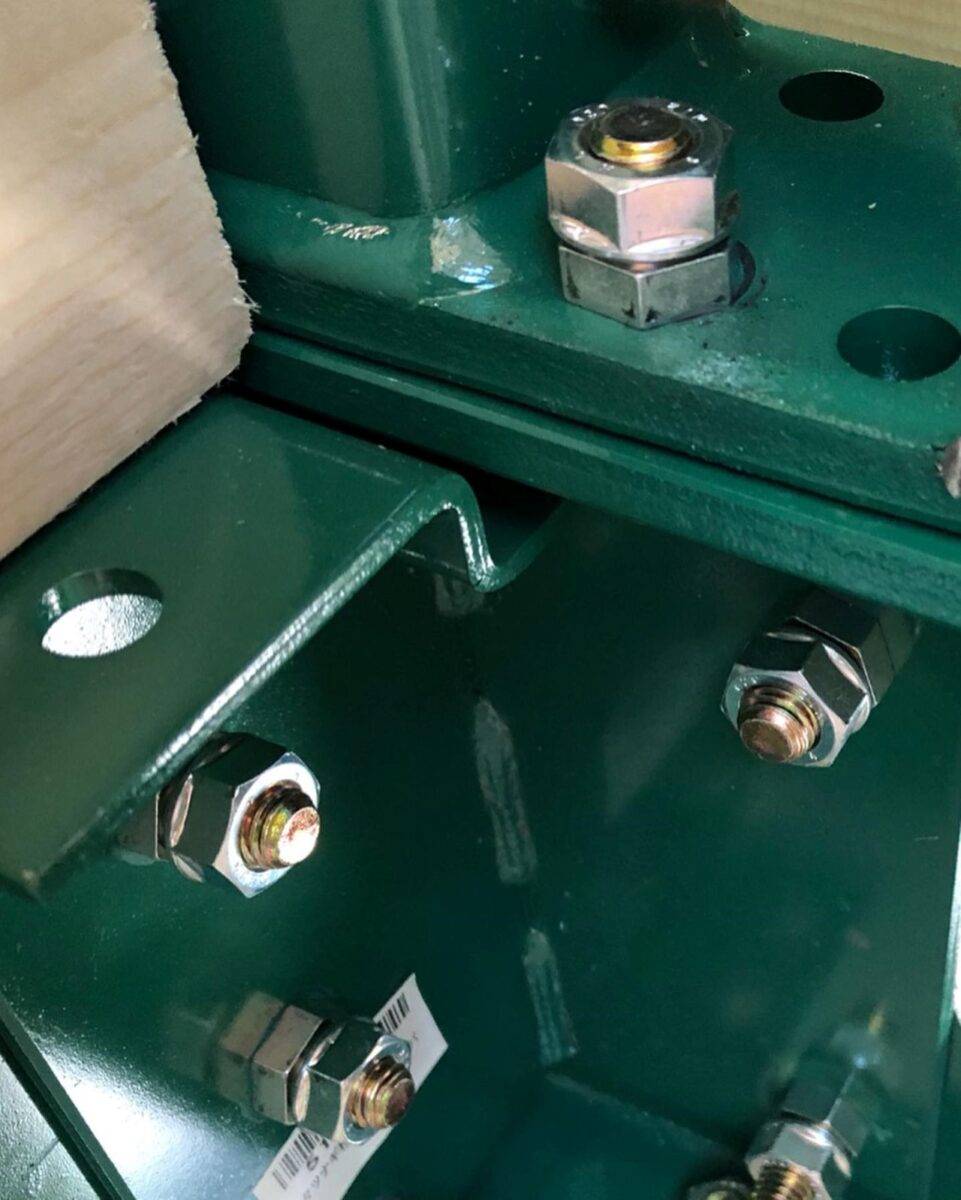
Steel structures are widely used in construction, infrastructure, and industrial applications due to their strength, durability, and load-bearing capacity.
From bridges and buildings to industrial frameworks, these structures rely on bolted joints to maintain stability, safety, and long-term performance.
In such applications, even a small loss of preload can affect the entire structure.
HARDLOCK® Nut is used in steel structures to help maintain secure fastening and consistent preload, even under dynamic loads and environmental exposure.
Why Fastening Is Critical in Steel Structures
Bolted joints in steel structures are responsible for:
- Load transfer between components
- Structural stability
- Resistance to dynamic forces
These joints must perform reliably over long service periods.
The Challenge: Loosening in Structural Applications
Steel structures are exposed to a range of conditions that can lead to loosening.
Dynamic Loads and Vibration
Structures may experience:
- Wind loads
- Traffic loads (bridges, infrastructure)
- Operational vibration in industrial settings
These forces can gradually reduce friction in threaded connections.
Fatigue and Cyclic Stress
Repeated loading and unloading cycles can:
- Affect preload
- Lead to micro-movements
- Increase the risk of loosening over time
Environmental Exposure
Steel structures are often exposed to:
- Temperature changes
- Moisture and corrosion
- Outdoor conditions over long periods
👉 Learn more about why bolts loosen:
https://www.hardlock.eu/why-do-bolts-nuts-come-loose-factors-influencing-bolt-preload-loss/
Why Preload Stability Matters
Maintaining consistent preload in steel structures is essential for:
- Proper load distribution
- Joint rigidity
- Structural safety
Loss of preload can lead to:
- Increased movement between components
- Uneven load transfer
- Reduced structural performance
HARDLOCK® Nut: Mechanical Locking for Structural Reliability
HARDLOCK® Nut uses a mechanical wedge-locking principle designed to maintain preload under real operating conditions.
How it works:
- Two nuts form a single locking system
- The top nut has an eccentric (off-center) thread
- Tightening creates a radial locking force
- This force helps prevent rotation
👉 Full technical explanation:
https://www.hardlock.eu/why-the-hardlock-nut-does-not-loosen/
Key Benefits for Steel Structure Applications
✔ Maintains Structural Integrity
Stable fastening ensures:
- Reliable load transfer
- Reduced joint movement
- Consistent structural performance
✔ Resists Loosening Under Dynamic Loads
HARDLOCK® Nut helps maintain joint stability even under:
- Wind-induced vibration
- Traffic loads
- Industrial operation
✔ Improves Safety in Critical Structures
Structural reliability is essential for safety in:
- Bridges
- Buildings
- Industrial frameworks
👉 Learn more about safety-critical applications:
https://www.hardlock.eu/hardlock-the-ultimate-fastener-for-safety-critical-applications/
✔ Reduces Maintenance and Lifecycle Costs
Frequent inspection and retightening can be costly.
By maintaining preload, HARDLOCK® Nut can help:
- Reduce maintenance frequency
- Improve operational efficiency
- Lower total cost of ownership
✔ Supports Long-Term Durability
Stable fastening contributes to:
- Reduced fatigue effects
- Improved resistance to environmental factors
- Longer service life
Comparison with Conventional Fastening Methods
Traditional fastening solutions often rely on friction or additional locking elements.
Limitations:
- Loosening under vibration
- Reduced effectiveness over time
- Increased maintenance requirements
👉 Compare fastening technologies:
https://www.hardlock.eu/hardlock-nut-vs-prevailing-torque-type-nut/
Engineering Perspective: Risk and Cost in Steel Structures
In structural applications, fastening reliability directly impacts:
- Safety
- Structural integrity
- Lifecycle costs
Failure of a single bolted joint can affect the performance of the entire system.
Using a reliable fastening solution helps reduce these risks.
👉 Learn more about benefits:
https://www.hardlock.eu/hardlock-nut-main-benefits/
Related Applications in Construction and Infrastructure
Similar challenges exist in other structural environments:
- Aluminum structures → https://www.hardlock.eu/hardlock-nut-on-building-aluminum-frames/
- Noise barriers → https://www.hardlock.eu/hardlock-nut-on-noise-barriers/
- Foundation bolts → https://www.hardlock.eu/hardlock-nut-on-foundation-bolts/
- Communication & Transmission Towers → https://www.hardlock.eu/hardlock-nuts-in-communication-transmission-towers/
👉 Explore full application range:
https://www.hardlock.eu/where-is-hardlock-nut-often-used/
When to Use HARDLOCK® Nut in Steel Structures
Consider this solution if your application involves:
- Structural load-bearing connections
- Dynamic loads or vibration
- Long service life requirements
- High safety standards
Conclusion
Steel structures require fastening solutions that ensure stability, safety, and long-term performance.
By maintaining preload and resisting loosening, HARDLOCK® Nut provides a mechanical solution for reliable structural connections in demanding environments.
Looking to Improve Structural Reliability?
Choosing the right fastening system can enhance safety, reduce maintenance, and improve overall performance.
👉 Start with the fundamentals:
https://www.hardlock.eu/why-do-bolts-nuts-come-loose-factors-influencing-bolt-preload-loss/