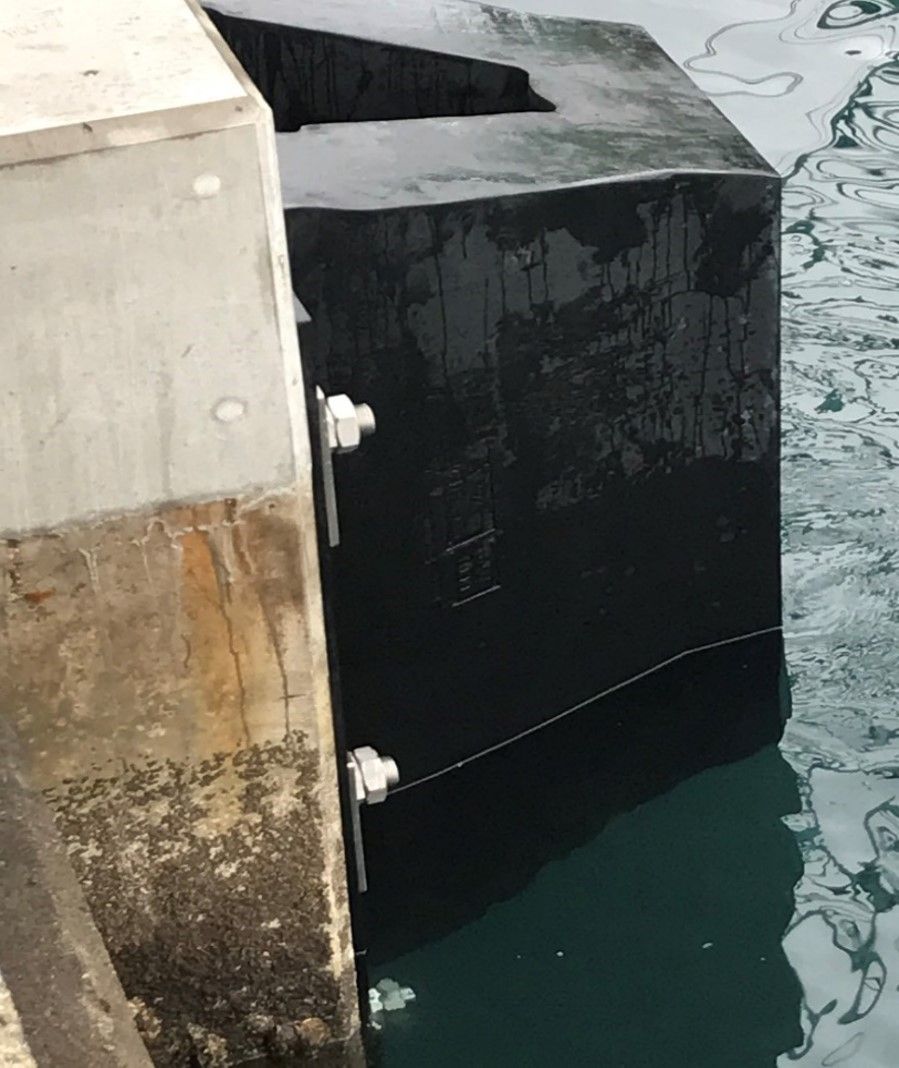
Skid fenders are essential components in marine and port infrastructure, designed to absorb impact and protect vessels and structures during berthing operations.
These systems are exposed to repeated mechanical loads, harsh environmental conditions, and continuous operational stress.
In such demanding environments, maintaining secure fastening is critical.
HARDLOCK® Nut is used on skid fenders to help ensure stable bolted connections and long-term reliability, even under heavy impact and vibration.
What Are Skid Fenders and Why Fastening Matters
Skid fenders are used in:
- Ports and harbors
- Docking facilities
- Offshore structures
Their primary function is to:
- Absorb impact energy from vessels
- Protect quay walls and structures
- Ensure safe berthing operations
These systems rely on bolted joints to maintain structural integrity under load.
The Challenge: Extreme Conditions in Marine Environments
Skid fender systems are exposed to some of the harshest operating conditions.
Repeated Impact Loads
During berthing, vessels generate:
- High impact forces
- Shock loads
- Dynamic stress on fastening points
These forces can gradually loosen conventional fasteners.
Continuous Vibration
Wave motion, vessel movement, and operational activity create:
- Ongoing vibration
- Cyclic loading conditions
Corrosive Environment
Marine environments expose components to:
- Saltwater
- Moisture
- Corrosive elements
This can accelerate degradation of fasteners and reduce performance.
Limited Maintenance Access
Many fender systems are installed in locations where:
- Access is difficult
- Maintenance intervals are long
👉 Learn more about why bolts loosen:
https://www.hardlock.eu/why-do-bolts-nuts-come-loose-factors-influencing-bolt-preload-loss/
Why Preload Stability Is Critical
In skid fender applications, maintaining preload ensures:
- Secure attachment of fender elements
- Proper energy absorption
- Structural reliability
Loss of preload can lead to:
- Movement between components
- Reduced impact performance
- Increased risk of structural damage
HARDLOCK® Nut: Mechanical Locking for Marine Reliability
HARDLOCK® Nut uses a mechanical wedge-locking principle to maintain preload under demanding conditions.
How it works:
- Two nuts form a single locking system
- The top nut has an eccentric (off-center) thread
- Tightening creates a radial locking force
- This force helps prevent rotation
👉 Full explanation:
https://www.hardlock.eu/why-the-hardlock-nut-does-not-loosen/
Key Benefits for Skid Fender Applications
✔ Resists Loosening Under Impact Loads
HARDLOCK® Nut helps maintain joint stability even under repeated shock and impact conditions.
✔ Maintains Performance in Corrosive Environments
Suitable for applications exposed to marine conditions where corrosion resistance is essential.
👉 Learn more about corrosion-resistant solutions:
https://www.hardlock.eu/hardlock-nut-rustproof-and-vibration-resistant-product/
✔ Reduces Maintenance Requirements
Stable fastening can help:
- Reduce inspection frequency
- Minimize maintenance interventions
- Lower lifecycle costs
✔ Supports Safety and Structural Integrity
Reliable fastening contributes to:
- Safe berthing operations
- Protection of infrastructure
- Reduced risk of failure
👉 Safety-critical applications:
https://www.hardlock.eu/hardlock-the-ultimate-fastener-for-safety-critical-applications/
✔ Long-Term Reliability
Mechanical locking supports consistent performance over time, even in harsh environments.
Comparison with Conventional Fastening Methods
Traditional fastening solutions may rely on friction or additional locking components.
Limitations:
- Loosening under vibration and impact
- Reduced effectiveness over time
- Increased maintenance requirements
👉 Compare fastening technologies:
https://www.hardlock.eu/hardlock-nut-vs-prevailing-torque-type-nut/
Engineering Perspective: Cost of Failure in Marine Infrastructure
In port and marine environments, fastening failure can lead to:
- Damage to vessels and structures
- Operational delays
- High repair costs
Reliable fastening solutions help reduce these risks and improve long-term performance.
👉 Learn more about overall benefits:
https://www.hardlock.eu/hardlock-nut-main-benefits/
Related Marine and Infrastructure Applications
Similar challenges exist in other marine environments:
- Arch fenders → https://www.hardlock.eu/hardlock-nut-on-arch-fenders/
- Offshore & Onshore Applications of HARDLOCK Nuts: Engineering Reliability in Extreme Environments: → https://www.hardlock.eu/offshore-onshore-applications-of-hardlock-nuts-engineering-reliability-in-extreme-environments/
- Rustproof and Vibration-Resistant Fastening Solution → https://www.hardlock.eu/hardlock-nut-rustproof-and-vibration-resistant-product/
- Cranes → https://www.hardlock.eu/hardlock-nut-on-cranes-2/
- Cranes → https://www.hardlock.eu/hardlock-nut-on-cranes/
👉 Explore full application range:
https://www.hardlock.eu/where-is-hardlock-nut-often-used/
When to Use HARDLOCK® Nut on Skid Fenders
Consider this solution if your application involves:
- High impact loads
- Marine or offshore environments
- Exposure to vibration and corrosion
- High cost of maintenance or failure
Conclusion
Skid fender systems require fastening solutions that can withstand impact, vibration, and harsh environmental conditions.
By maintaining preload and resisting loosening, HARDLOCK® Nut provides a mechanical solution for reliable fastening in marine infrastructure applications.
Looking to Improve Marine System Reliability?
Choosing the right fastening solution can reduce maintenance, improve safety, and extend the service life of critical infrastructure.
👉 Start with the fundamentals:
https://www.hardlock.eu/why-do-bolts-nuts-come-loose-factors-influencing-bolt-preload-loss/