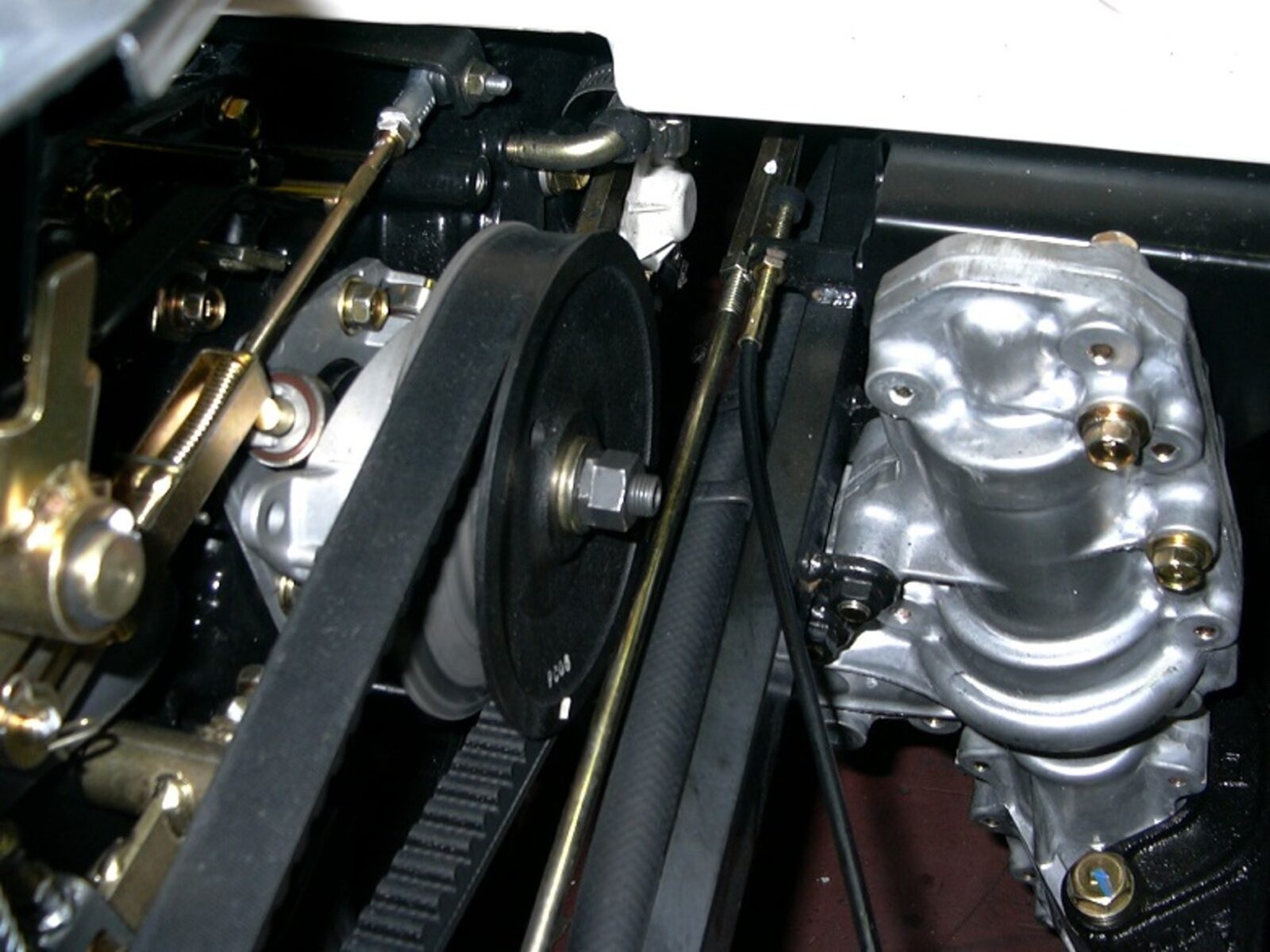
In motor vehicle engineering, reliable fastening is critical for safety, durability, and cost control. Anti loosening nuts automotive applications address one of the most persistent challenges: vibration-induced loosening.
From drivetrain systems to suspension assemblies, real-world conditions expose fasteners to dynamic loads that conventional locking methods cannot withstand.
Why Loosening Remains a Critical Risk in Automotive Engineering
Vehicle systems are continuously exposed to:
- Engine start-up torque shock
- Drivetrain vibration
- Braking and cornering loads
- Progressive loss of clamp force due to wear
Research on hybrid powertrains shows that engine pulsation during start-up creates significant vibration and torque fluctuation, directly impacting fastener stability .
➡️ https://www.hardlock.eu/why-the-hardlock-nut-does-not-loosen/
Case Study: HARDLOCK® Nuts in Transmission Systems
Problem: Transmission Shaft Loosening
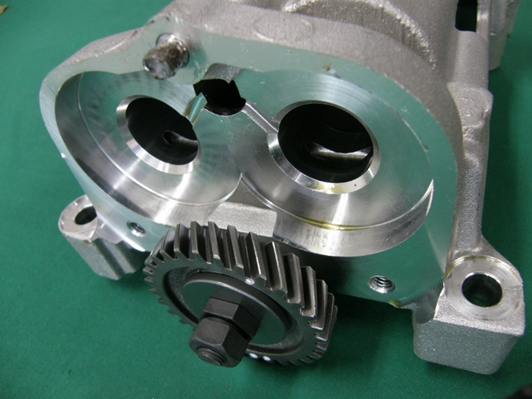
A major OEM (GM Korea)) experienced:
- Flange nut loosening
- High vibration during engine start-up
- Risk of drivetrain failure and recall
Solution: HARDLOCK® Nut (HLN-B)
- Mechanical locking independent of friction
- Stable under vibration and shock
Result
- Immediate elimination of loosening
- Increased reliability of transmission shaft
HARDLOCK® Nuts for Truck Suspension Systems
Application: Trailing Arm Spring Bolt (Air Suspension)
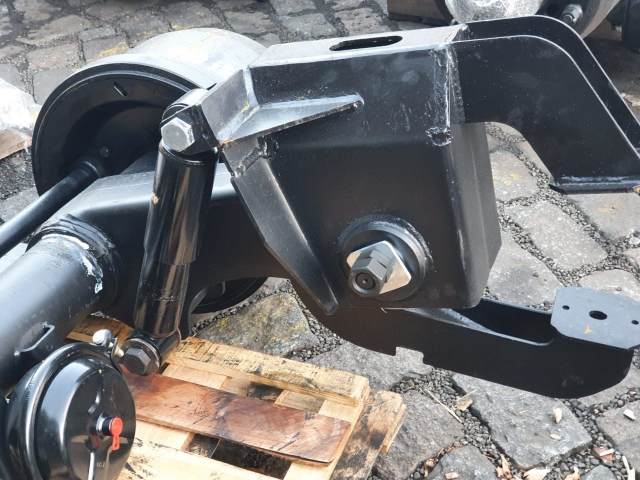
The trailing arm transfers forces from the wheel to the chassis under:
- Vertical loads
- Longitudinal forces (braking, road irregularities)
- Lateral forces
Challenge
- Wear reduces clamp force
- Conventional nuts loosen → increased play → accelerated wear
HARDLOCK® Performance
- No rotational loosening even with reduced clamp force
- Improved durability of suspension joints
➡️ Related: https://www.hardlock.eu/anti-loosening-nut-bolt-preload-loss/
Multi-Axle Steering Systems and HARDLOCK® Nuts
Problem
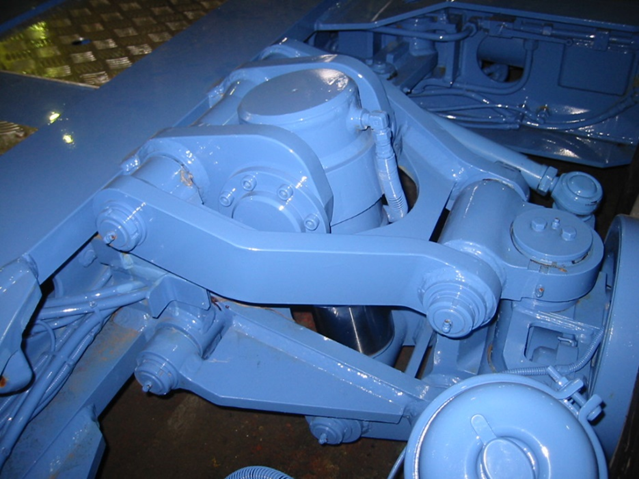
Hydraulic multi-axle trailer systems face:
- Complex multi-directional loads
- Continuous vibration
- Frequent loosening of standard lock nuts
Previous workaround:
- Welding nuts → difficult maintenance
Solution: HARDLOCK® Bearing Nuts (HLB)
- Maintains preload under vibration
- Allows disassembly without damage
- Eliminates need for welding
Result
- Reduced maintenance time
- Increased operational reliability
Engineering Principle Behind HARDLOCK® Nuts
Unlike friction-based locking systems, HARDLOCK® uses a wedge-locking mechanism:
- Convex + concave nut interaction
- Mechanical locking force
- Independent of clamp force
This is critical for automotive applications where:
- Clamp force decreases over time
- Dynamic loads are constant
➡️ Learn more: https://www.hardlock.eu/hardlock-nut-the-worlds-strongest-self-locking-nut/
Additional Use Cases for HARDLOCK® Nuts in Automotive
Heavy-Duty Vehicles
- Concrete pump trucks (hydraulic systems)
- Dump truck trunnions
- Chassis fastening
Agricultural & Utility Vehicles
- Transmission shafts
- Engine components
- Structural connections
General Automotive Engineering
- Suspension systems
- Rotating shafts
- Safety-critical joints
Business Benefits of HARDLOCK® Nuts Solutions
Eliminate Recall Risk
Fastener loosening is a common root cause of failure.
Reduce Maintenance Costs
No re-tightening cycles required.
Improve Safety Compliance
Critical for inspected components (e.g., suspension).
Increase Reliability
Stable performance under vibration and wear.
When to Specify HARDLOCK® Nuts
Use HARDLOCK® when:
- Vibration is unavoidable
- Clamp force loss is expected
- Safety-critical joints are present
- Maintenance access is limited
- Downtime costs are high
Conclusion: HARDLOCK® Nuts = Safety by Design
Real-world applications confirm that anti loosening nuts automotive solutions are not optional—they are essential.
HARDLOCK® delivers:
- Proven performance in Original Equipment Manufacturer (OEM) applications
- Mechanical reliability beyond friction-based systems
- Long-term cost and safety advantages