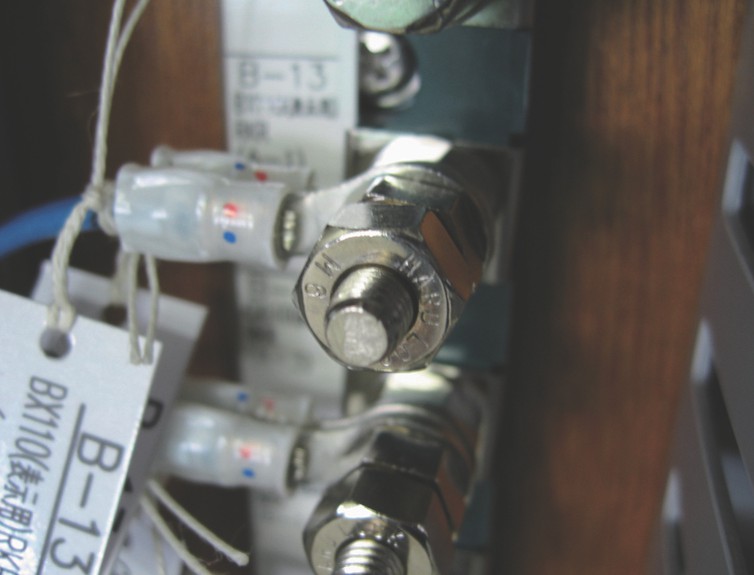
Busbar Connection Reliability in High-Load Electrical Systems
In modern power distribution systems, busbar connection reliability play a critical role in ensuring stable and efficient current flow. Whether in substations, switchgear, renewable energy installations, or industrial facilities, these bolted joints must remain secure under demanding conditions.
However, one persistent issue continues to compromise system reliability: loosening caused by vibration and thermal cycling.
Even slight loosening in a busbar joint can result in:
- Increased contact resistance
- Localized overheating
- Energy losses
- Risk of fire or catastrophic failure
For operators, this translates directly into downtime, maintenance costs, and safety risks.
Why Busbar Connection Reliability Is Often Compromised
Standard nuts rely primarily on friction to maintain preload. In electrical systems, this approach is often insufficient due to:
- Continuous vibration (transformers, generators, transport systems)
- Thermal expansion and contraction from load cycles
- Electromagnetic forces in high-current environments
Over time, these forces reduce clamping force, leading to micro-movement at the contact interface.
👉 The result: degradation that is often invisible—until failure occurs.
Why This Is Critical in Busbar Applications
Busbar systems differ from standard mechanical joints in one key aspect:
Electrical performance depends directly on mechanical stability.
A loosened joint is not just a mechanical issue—it is an electrical failure point.
Typical consequences include:
- Hot spots detectable via thermography
- Oxidation at contact surfaces
- Reduced conductivity
- Accelerated component aging
This makes reliable anti-loosening technology essential, not optional.
The HARDLOCK® Solution: Mechanical Wedge Locking That Cannot Loosen
HARDLOCK® nuts use a unique wedge-locking mechanism that fundamentally differs from friction-based fasteners.
How It Works
- A pair of nuts with an eccentric cam (wedge) interface
- When tightened, the wedge creates a mechanical lock
- External forces increase locking force rather than reducing it
This ensures that:
✔ Loosening is physically prevented
✔ Preload is maintained over time
✔ Performance is consistent even under extreme vibration
Proven Performance in Demanding Environments
HARDLOCK® nuts are widely used in industries where reliability is critical and failure is not acceptable.
From transportation and heavy machinery to energy infrastructure, these applications share a common challenge: continuous vibration, dynamic loads, and difficult maintenance conditions.
Real-world examples include:
- HARDLOCK® Nut for Electrical Applications: Vibration-Proof Fastening → see
https://www.hardlock.eu/hardlock-nut-electrical-applications/ - Locking Nut for Electronic Equipment: Vibration-Proof HARDLOCK® Solution → see
https://www.hardlock.eu/blog-locking-nut-electronic-equipment/ - HARDLOCK® Nut in Railway Lines → see
https://www.hardlock.eu/hardlock-nut-in-railway-lines/ - Where Is HARDLOCK® Nut Used? Key Applications Across Industries → see
https://www.hardlock.eu/where-is-hardlock-nut-often-used/ - Anti loosening nut for busbars: HARDLOCK® solution for secure distribution boards → see
https://www.hardlock.eu/anti-loosening-nut-for-busbars/ - Stainless Steel Anti Loosening Nut: HARDLOCK® Vibration-Resistant Solution → see
https://www.hardlock.eu/stainless-steel-anti-loosening-nut-hardlock/
These examples demonstrate that HARDLOCK® technology is proven across applications where conventional fastening methods fail under vibration.
Busbar Connection Reliability in Real-World Applications
1. Substations and Switchgear
Busbar joints in substations are exposed to:
- Load fluctuations
- Short-circuit forces
- Environmental vibration
HARDLOCK® nuts ensure long-term stability without retightening cycles.
2. Renewable Energy Systems
Wind turbines and solar installations introduce:
- Cyclic mechanical loads
- Remote installation challenges
Using HARDLOCK® reduces maintenance visits and improves uptime.
3. Industrial Power Distribution
Factories rely on continuous power supply. Loose busbar connections can lead to:
- Production downtime
- Equipment damage
HARDLOCK® provides maintenance-free reliability.
Cost of Failure vs. Cost of Prevention
A single failed busbar connection can result in:
- Unexpected outages
- Expensive repairs
- Safety incidents
In contrast, implementing a proven anti-loosening solution like HARDLOCK® represents a minimal upfront investment with significant lifecycle savings.
Best Practices for Busbar Joint Reliability
Electrical joint performance is often evaluated according to standards defined by organizations such as the IEC and IEEE.
To maximize performance:
- Ensure proper torque during installation
- Use consistent surface preparation
- Apply certified anti-loosening technology
- Include periodic inspection (thermography recommended)
Conclusion: Engineering Reliability into Every Connection
In high-current electrical systems, reliability is not just about design—it is about every connection point.
HARDLOCK® nuts provide a mechanically secure, vibration-proof solution that eliminates loosening at the source.
For engineers and operators, this means:
- Increased system reliability
- Reduced maintenance
- Improved safety
Looking to improve the reliability of your busbar connections?
👉 Contact our technical team for application guidance
👉 Request a sample or technical consultation
👉 Explore our solutions for electrical systems