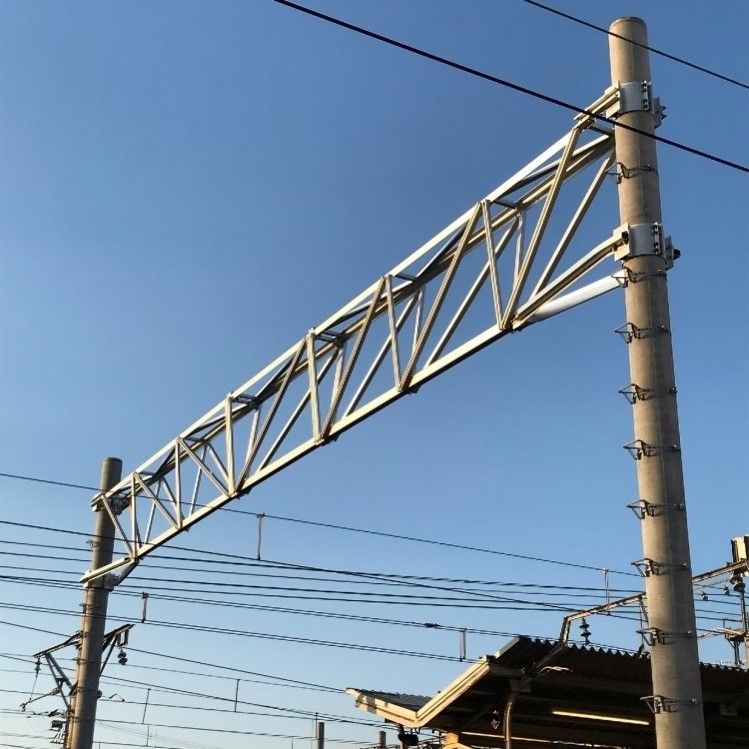
Aluminum beam trusses are widely used in construction, event structures, industrial frameworks, and architectural applications.
Their popularity comes from their high strength-to-weight ratio, corrosion resistance, and ease of installation.
However, ensuring reliable fastening in these structures is critical—especially where safety, load stability, and long-term performance are required.
HARDLOCK® Nut is used on aluminum beam trusses to help maintain secure connections and stable preload, even under dynamic and outdoor conditions.
Why Fastening Matters in Aluminum Truss Structures
Aluminum trusses are used in:
- Temporary and permanent structures
- Event staging systems
- Roof and support frameworks
- Industrial and architectural constructions
These structures rely on bolted joints to maintain:
- Structural integrity
- Load distribution
- Safety of the entire system
The Challenge: Loosening in Lightweight Structures
Although aluminum structures are lightweight, they are often exposed to conditions that can lead to loosening.
Vibration and Dynamic Loads
Trusses may be exposed to:
- Wind loads
- Movement of attached equipment (lighting, sound systems)
- Repeated assembly and disassembly
These factors can reduce friction in threaded connections.
Material Behavior
Aluminum has different mechanical properties compared to steel:
- Lower stiffness
- Greater sensitivity to deformation
- Potential for preload changes over time
Outdoor Exposure
Many truss systems are used outdoors, where they face:
- Temperature fluctuations
- Moisture and environmental effects
👉 Learn more about why bolts loosen:
https://www.hardlock.eu/why-do-bolts-nuts-come-loose-factors-influencing-bolt-preload-loss/
Why Preload Stability Is Critical
In aluminum beam trusses, loss of preload can lead to:
- Reduced joint rigidity
- Increased movement between components
- Uneven load distribution
- Potential safety risks
Maintaining consistent clamping force is essential for reliable performance.
HARDLOCK® Nut: Mechanical Locking for Structural Reliability
HARDLOCK® Nut uses a mechanical wedge-locking principle to maintain preload under dynamic conditions.
How it works:
- Two nuts function as a single locking system
- The top nut has an eccentric (off-center) thread
- Tightening creates a radial locking force
- This force helps prevent rotation
👉 Full technical explanation:
https://www.hardlock.eu/why-the-hardlock-nut-does-not-loosen/
Key Benefits for Aluminum Beam Trusses
✔ Maintains Structural Integrity
Stable fastening helps ensure:
- Consistent load distribution
- Reduced joint movement
- Reliable structural performance
✔ Resists Loosening Under Dynamic Conditions
HARDLOCK® Nut helps maintain joint stability even under:
- Wind loads
- Vibrations
- Repeated use
✔ Improves Safety in Temporary and Permanent Structures
Secure fastening is critical in applications where structural failure could pose safety risks.
👉 Learn more about safety-critical applications:
https://www.hardlock.eu/hardlock-the-ultimate-fastener-for-safety-critical-applications/
✔ Reduces Maintenance and Inspection Requirements
Frequent inspection and retightening can increase operational costs.
By maintaining preload, HARDLOCK® Nut can help:
- Reduce maintenance frequency
- Improve efficiency during installation and operation
✔ Supports Long-Term Performance
Stable fastening contributes to:
- Reduced wear
- Improved durability
- Longer service life of structural components
Comparison with Conventional Fastening Methods
Traditional fastening solutions may rely on friction or additional locking elements.
Limitations:
- Loosening under vibration
- Reduced effectiveness over time
- Increased maintenance requirements
👉 Compare fastening technologies:
https://www.hardlock.eu/hardlock-nut-vs-prevailing-torque-type-nut/
Engineering Perspective: Risk and Cost in Structural Applications
In structural systems, fastening reliability directly impacts:
- Safety
- Stability
- Lifecycle costs
Failure of a single connection can affect the entire structure.
Using a reliable fastening solution helps reduce these risks.
👉 Learn more about benefits:
https://www.hardlock.eu/hardlock-nut-main-benefits/
Related Applications in Construction and Infrastructure
Similar challenges exist in other structural applications:
- Constructions:
https://www.hardlock.eu/applications/constructions/ - Highways: How HARDLOCK® Improves Safety and Reduces Maintenance:
https://www.hardlock.eu/anti-loosening-nuts-for-highways-how-hardlock-improves-safety-and-reduces-maintenance/ - Suspension Bridges:
https://www.hardlock.eu/hardlock-nuts-in-suspension-bridges/ - Steel Structures:
https://www.hardlock.eu/hardlock-nut-on-steel-structures/ - Cranes:
https://www.hardlock.eu/hardlock-nut-on-cranes-2/ - Railway (Infrastructure):
https://www.hardlock.eu/applications/railway-infrastructure/ - Tunnel Boring Machines:
https://www.hardlock.eu/hardlock-nut-on-tunnel-boring-machines/ - Foundation Bolts:
https://www.hardlock.eu/hardlock-nut-on-foundation-bolts/ - Noise barriers:
https://www.hardlock.eu/hardlock-nut-on-noise-barriers/ - Aluminum frames:
https://www.hardlock.eu/hardlock-nut-on-building-aluminum-frames/ - Communication & Transmission Towers:
https://www.hardlock.eu/hardlock-nuts-in-communication-transmission-towers/
👉 Explore full application range:
https://www.hardlock.eu/where-is-hardlock-nut-often-used/
When to Use HARDLOCK® Nut on Aluminum Trusses
Consider this solution if your application involves:
- Lightweight structural systems
- Dynamic loads or vibration
- Outdoor exposure
- High safety requirements
Conclusion
Aluminum beam trusses require fastening solutions that ensure stability, safety, and long-term performance.
By maintaining preload and resisting loosening, HARDLOCK® Nut provides a mechanical solution for reliable structural connections in both temporary and permanent applications.
Looking to Improve Structural Reliability?
Choosing the right fastening system can enhance safety, reduce maintenance, and improve overall performance.
👉 Start with the fundamentals:
https://www.hardlock.eu/why-do-bolts-nuts-come-loose-factors-influencing-bolt-preload-loss/